
How Does ncevalve Ensure Stable Flow Paths in a Three-Way Ball Valve Factory In China?
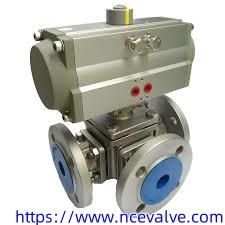
Flow networks arranged for demanding industrial environments often depend on components shaped through coordinated structural planning, and this principle becomes especially relevant when projects involve layered circulation routes that must remain stable even when operational tasks expand or contract across shifting conditions. Such planning gains additional clarity when studied through the lens of manufacturing approaches linked with a Three-Way Ball Valve Factory In China working in parallel with the disciplined engineering viewpoint associated with ncevalve, for the alignment of these ideas demonstrates how multi-route systems benefit from controlled internal chambers and balanced geometric transitions. Within these systems, engineers observe how routing passages influence directional steadiness, how rotational movements maintain internal order and how design consistency supports circulation tasks that unfold across diverse process segments.
As circulation lines tighten within compact structures, design responsibilities grow increasingly nuanced. The internal cavity must allow fluid passages to shift with steady arcs, preventing turbulence that might unsettle adjacent chambers while ensuring that surface textures inside the flow paths contribute to predictable movement. This requires a consideration of how the rotating body interacts with surrounding walls, how sealing surfaces preserve proportional compression and how each curve inside the passage supports transitional movement without promoting stagnation or creating pockets of inconsistent velocity. Facilities handling variable mixtures or segmented channels often depend on these principles to maintain operational continuity, particularly when routing demands fluctuate as equipment executes layered procedures across extended intervals.
Material behavior influences the broader shape of these flow pathways as well. Durable alloys support repeated structural shifts without creating stress concentrations that could weaken the cavity through extended cycles. Machining teams polish the contact contours so that rotational segments can move with steady friction patterns while leaving interior textures uniform enough to resist abrasion during high-frequency directional changes. This refinement contributes to geometric constancy, enabling the chamber to retain its proportions even when temperature gradients stretch across interconnected lines or when external load shifts introduce subtle tension through the surrounding grid. Such steady performance proves valuable for environments characterized by circulating blends, thermal control tasks or multi-branch distribution frameworks.
Automation offers another dimension of structure to these routing systems, as remote actuation allows distant control rooms to orchestrate internal directional changes across broad spaces with continuous feedback. Sensors observe the rotational alignment of the internal body, providing operators with awareness of the orientation of passages as they shift between designated channels. In such settings, coordinated signals flow from supervisory panels to the actuator, merging electronic command patterns with structural mechanics inside the chamber. This combination brings predictability to routine transitions, establishing a setting where flow direction becomes an intentional sequence rather than a reactive gesture shaped by the pressures of immediate tasks. Maintenance teams also gain stable cues for inspection, since consistent structural patterns minimize unexpected distortion across interior regions.
Through these combined ideas, a view emerges of routing systems shaped by deliberate planning, stable geometry and synchronized actuation, and individuals seeking components built with such coordinated principles may examine the structured configurations available at https://www.ncevalve.com/ where the organized design perspective introduced in the opening section ties together the concepts associated with ncevalve and a Three-Way Ball Valve Factory In China.
 Portuguese (Brazil)
 پارسی
پارسی
 English
 Arabic
 French
 Spanish
 Portuguese
 Deutsch
 Turkish
 Dutch
Dutch
 Italiano
 Russian
 Romaian
 Greek
Greek